The Structural Flower Trend I Can't Stop Making
For years, the round, garden-style bouquet was the safe choice — mine included. Soft, symmetrical, full of texture. It's beautiful, and it's not going anywhere. But lately, when I have a little downtime and some leftover stems in the studio, I find myself reaching for something else entirely: structure, negative space, and shapes that feel built rather than arranged.
This isn't really about "trends" for me — it started as pure experimentation, the kind I do on my own time, with no client watching. Some of it makes it to Instagram. A lot of it doesn't, because it didn't come out quite the way I imagined. But I think that's exactly the kind of thing worth sharing — not just the polished, finished work, but the process of figuring out what a shape wants to be.
Moving away from round, toward constructed
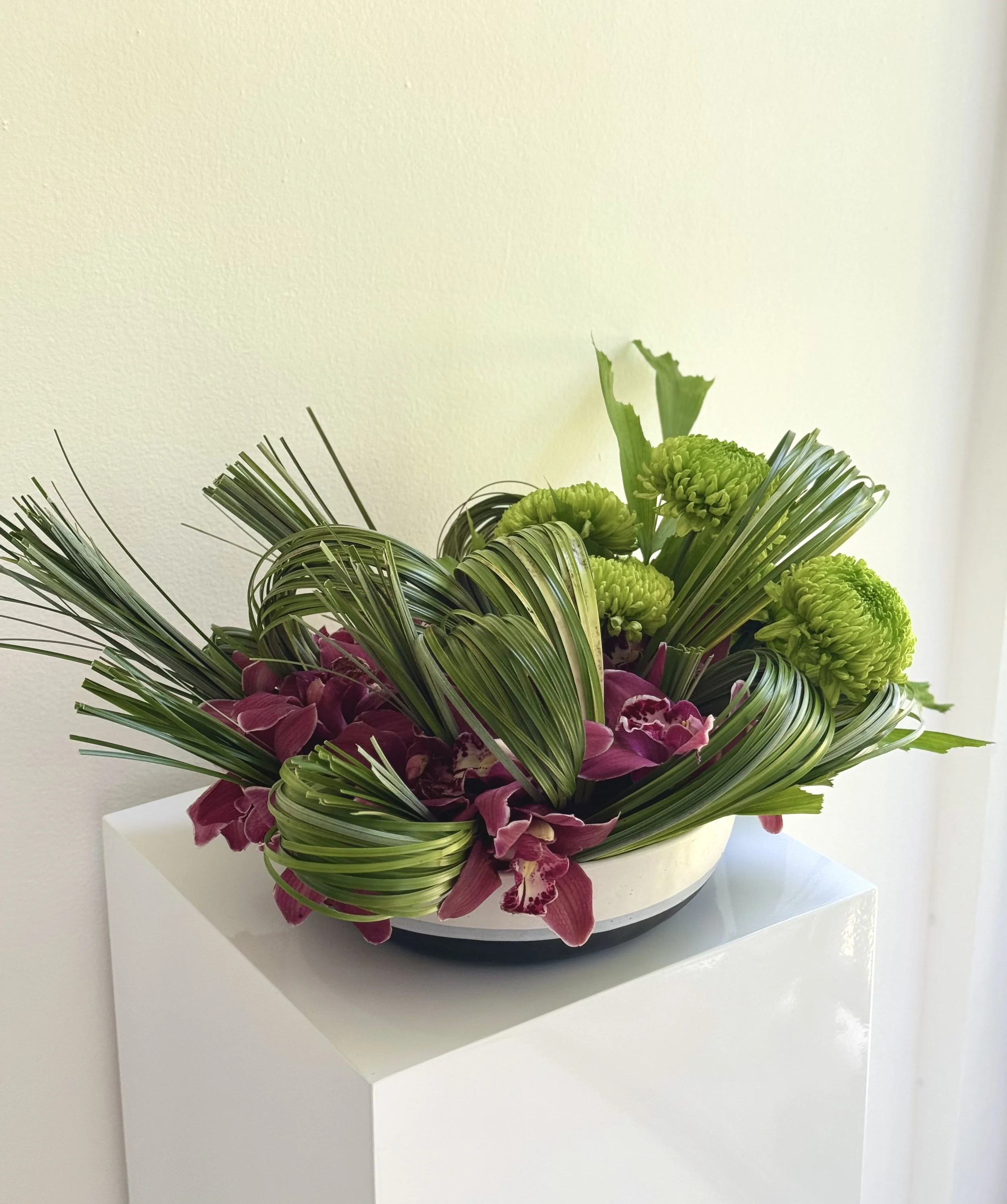
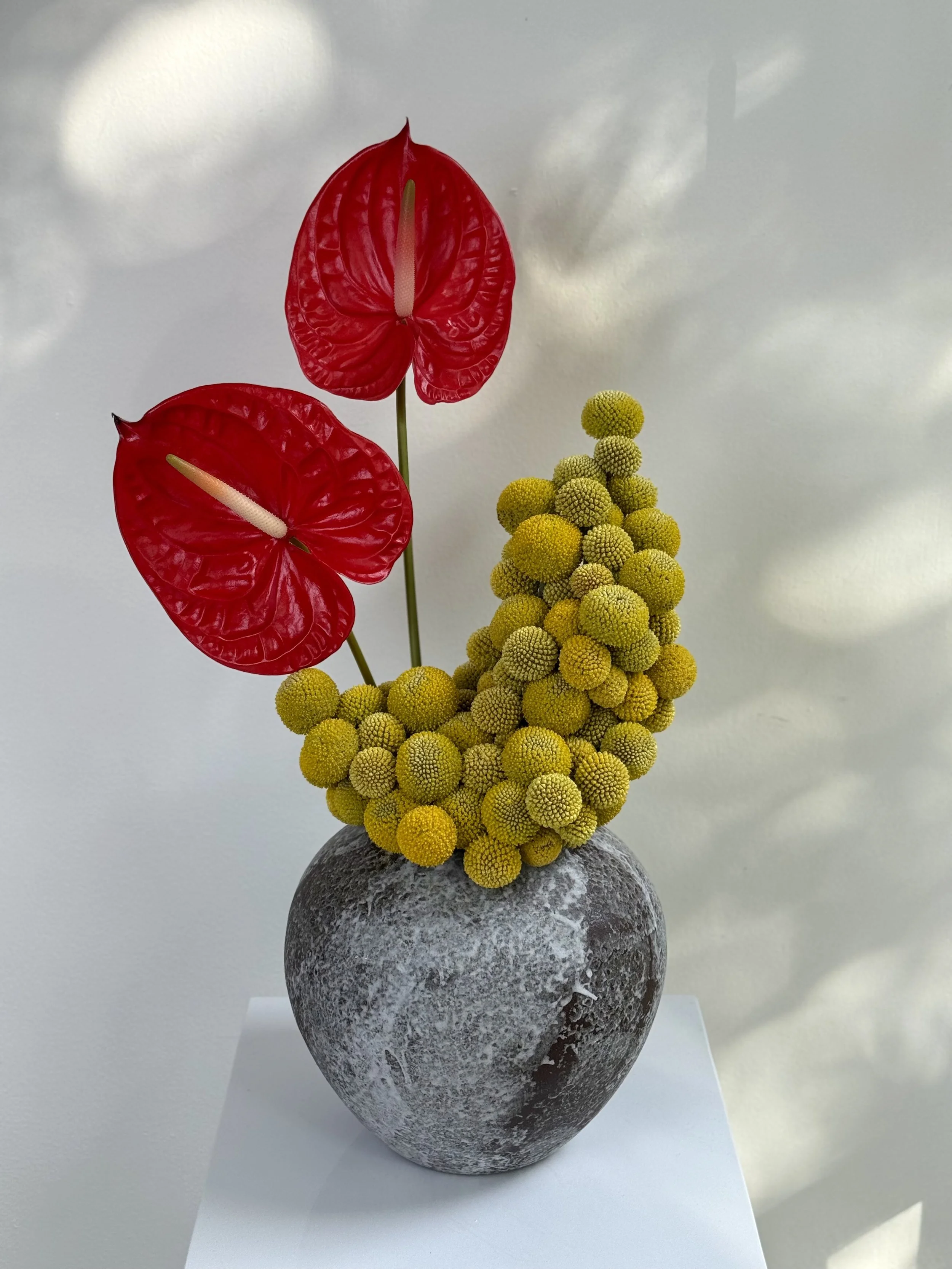
The biggest shift I'm feeling in my own work is away from soft and blended, toward something more intentional — pieces that feel constructed, with visible lines and angles, rather than simply filled in. Less about packing space evenly, more about deciding where the negative space goes and letting the structure do some of the work.
Bear grass has become one of my favorite tools for this. Wound tightly, looped, left to trail — it adds movement and structure without adding bulk, and it photographs beautifully against something bold. Anthuriums do something similar in a completely different way — their clean, graphic shape holds its own in a composition instead of blending into the mass around it. Both have been showing up in my experiments a lot this year, and I don't think I'm alone — florists everywhere seem to be circling back to strong shapes and negative space instead of dense, garden-style fullness.
The trend I haven't tried yet — but can't stop thinking about
I'll admit something: I've never loved sunflowers in arrangements. On their own, in a field, they're perfect. But in a mixed composition, they tend to pull all the attention and flatten everything around them. Lately though, I keep seeing florists strip the petals entirely — just the dark, textured centers, used almost like a sculptural element rather than "a flower." No petals competing for attention, just shape and texture. I haven't done this one yet, but it's on my list, and I have a feeling it's going to change my mind about sunflowers completely.
Where this comes from
A lot of this experimentation starts on Pinterest, if I'm honest — I save far more than I ever end up making. I don't try to copy what I see; I try to understand why it works, and then find my own way into it, the same way I've done with other techniques over the years. You can see more of these experiments as they happen on Instagram.
Why I'm sharing this now
I don't build these pieces for every client — a wedding centerpiece still usually calls for something softer, more traditional. But for events, editorial shoots, or just because I had extra stems and an afternoon free, this is where my curiosity is right now. Some of my favorite pieces have come from exactly that — no brief, no client, just flowers and a quiet afternoon.
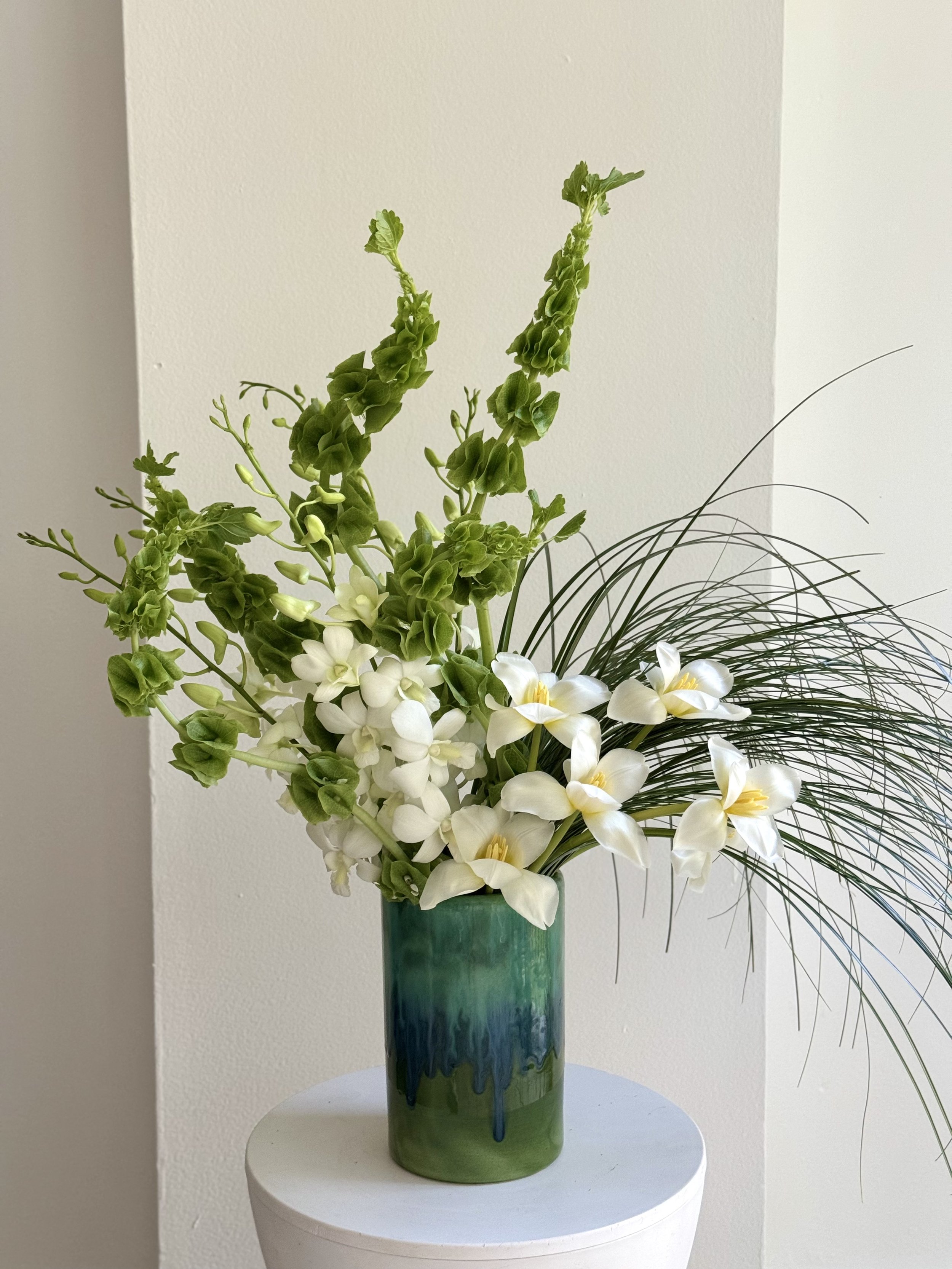
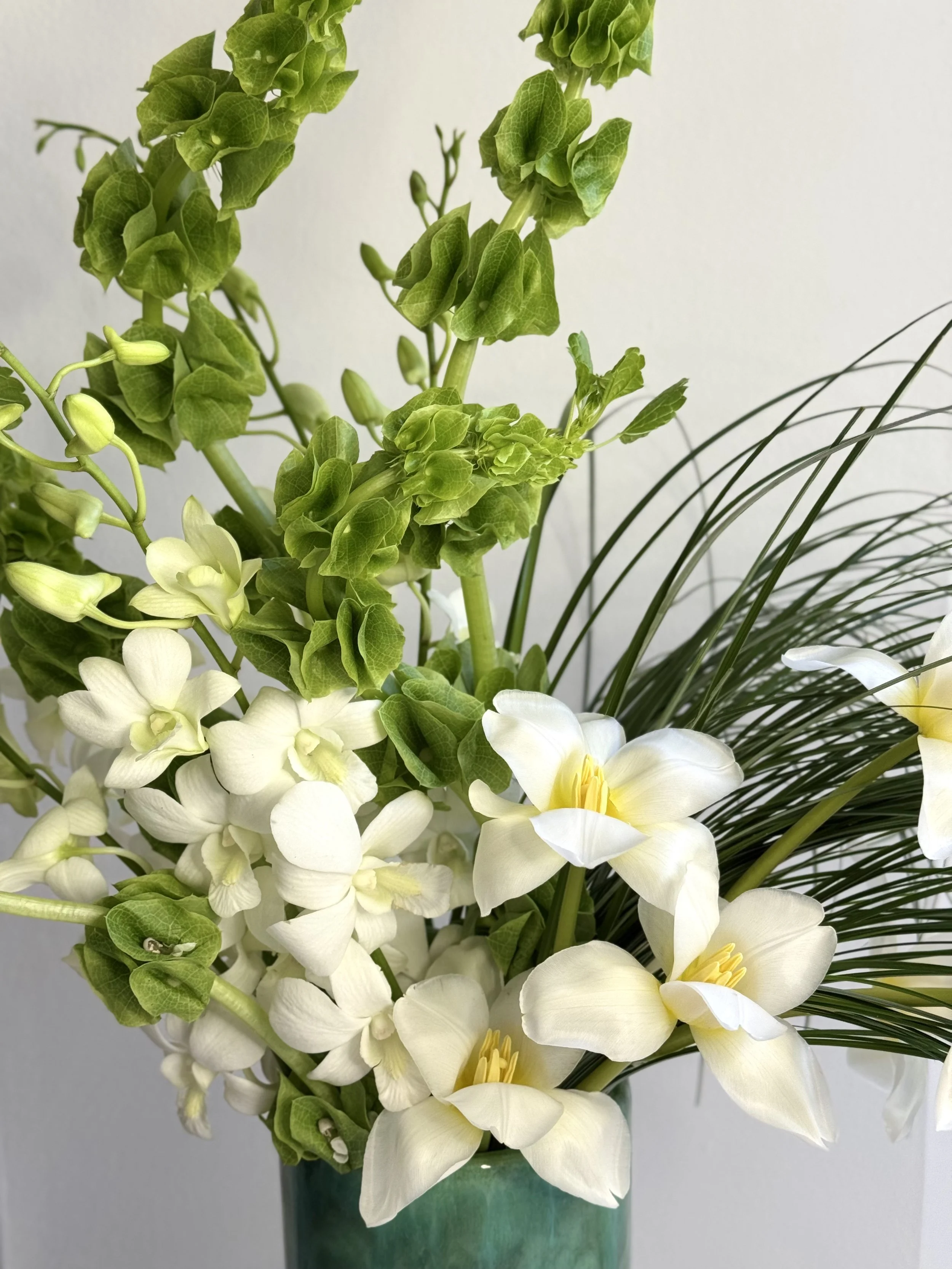
If you're the kind of client who wants something that doesn't look like everyone else's tablescape — structural, a little unexpected, built around shape instead of just color — this is exactly the direction I'd love to explore with you.